
Our conservation biology research goal is to develop a comprehensive species inventory of regional fauna based on verified original specimen data (first record) and field observations. I believe crucial species data over the past decades need to be mobilised, databased and made accessible for future analysis. Only with that knowledge can we learn to understand the scale and then extrapolate the extent of species extinction rates into actual numbers. Collaboration is key.
2024
Illuminating Firefly Diversity: Trends, Threats and Conservation Strategies
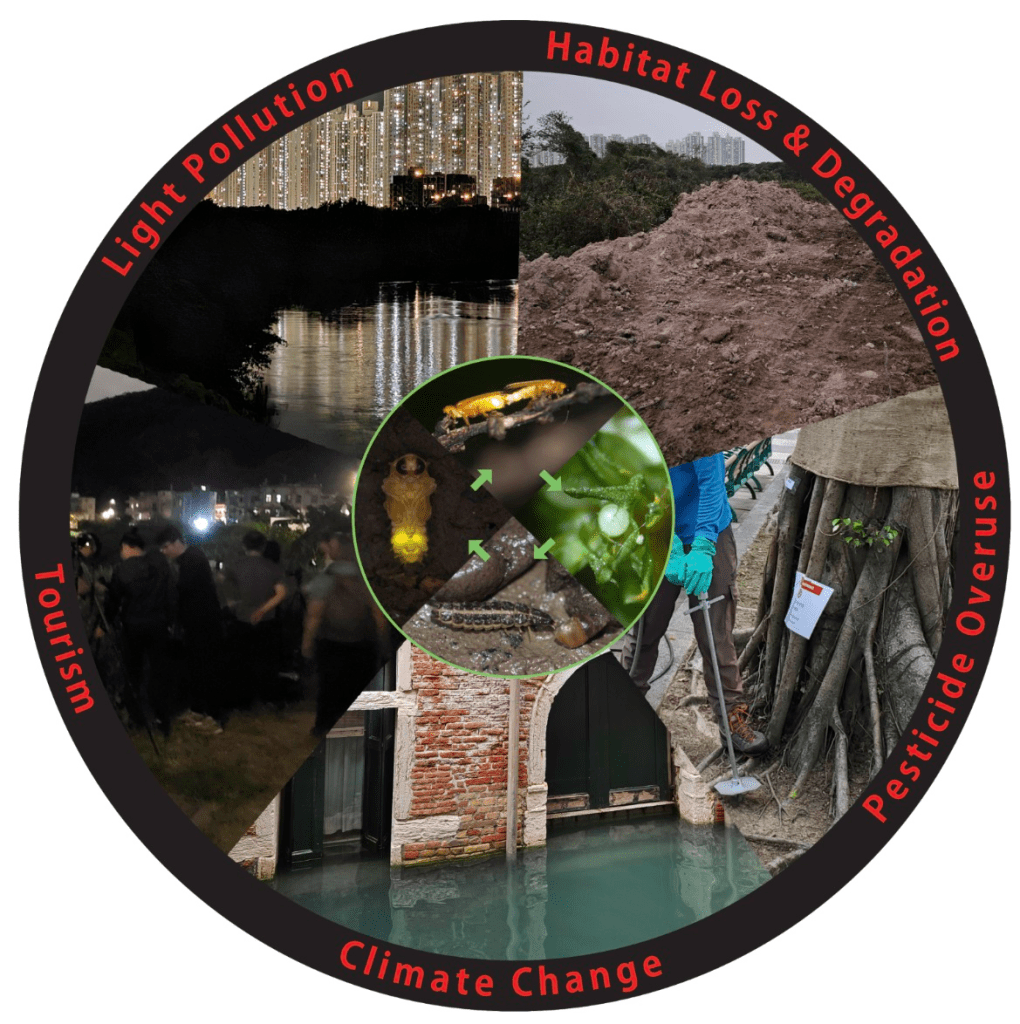
We describe work by the IUCN SSC Firefly Specialist Group to identify species currently facing elevated extinction risks and to devise conservation strategies to protect them. To date, IUCN Red List assessments have been completed for 150 firefly taxa, about 20% of which face heightened extinction risks. The conservation status for many species has yet to be determined due to insufficient information, although targeted surveys and community science projects have contributed valuable new data. Finally, we highlight some examples of successful firefly habitat protection and restoration efforts, and we use the framework of the IUCN SSC Species Conservation Cycle to point out high-priority actions for future firefly conservation efforts.
Link to article in Insects: Lewis et al. 2024
2023
Two centuries of biodiversity discovery and loss in Singapore
This paper is a culmination of many series of studies includin Singapore’s butterflies extinction project. Singapore has lost most of its tropical primary forest, yet it has an exceptionally detailed biodiversity record. Researchers compiled a database of Singapore’s biodiversity records and estimated extinction rates using statistical methods. The estimated overall extinction rate was 37%, which is half the rate estimated previously for Singapore. However, extinctions were more concentrated among larger, charismatic species. By 2100, Southeast Asia will have a landscape dominated by humans and will resemble a “tropical Europe” with approximately 80% of the original species surviving.
Link to article in PNAS: Chisholm et al. 2024
2021
A comprehensive review of firefly tourism
A review led by Professor Sara Lewis with 16 members of the IUCN Firefly Specialist group (myself included) provides the first comprehensive review of the geographic scope, magnitude, focal species, and other attributes of the major firefly tourism sites worldwide.
We offer science-based best practices for firefly ecotourism that can be tailored to fit local circumstances, including recommendations to:
- Conserve the habitats required for all life stages to thrive
- Involve local communities as key stakeholders
- Provide training programs for guides and interpretive materials for visitors.
Finally, we provide suggestions for transforming tourist behaviour to minimize the impact on firefly populations.
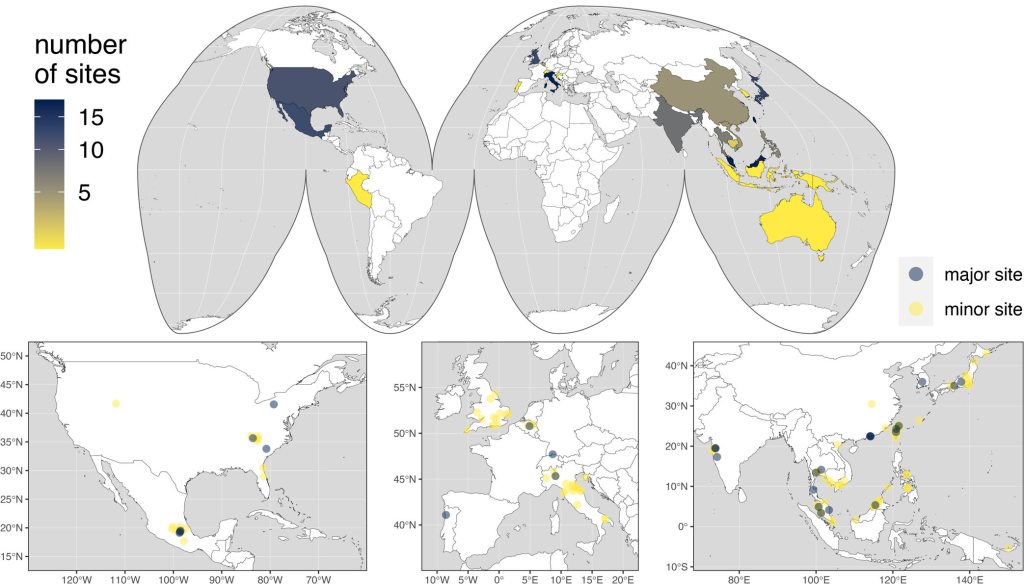
Reference: Lewis, SM, Thancharoen, A, Wong, CH, …, Jusoh, WFA, et al. 2021. Firefly tourism: Advancing a global phenomenon toward a brighter future. Conservation Science and Practice. e391. https://doi.org/10.1111/csp2.391
Read: Lewis et al 2021
2020
Singapore’s butterflies extinction
A study led by theoretical ecologists Meryl Theng and Dr Ryan Chisholm on extirpations among butterflies, a particularly well-known insect group, in the highly developed and biologically well-surveyed island city-state of Singapore. Building on existing butterfly species lists, we collated museum and naturalist records over the last two centuries and used statistical models to estimate the total extirpation rate since the first major collections in 1854. In addition, we compiled a set of traits for each butterfly species and explored how they relate to species discovery and extirpation.
Read: Theng et al 2020
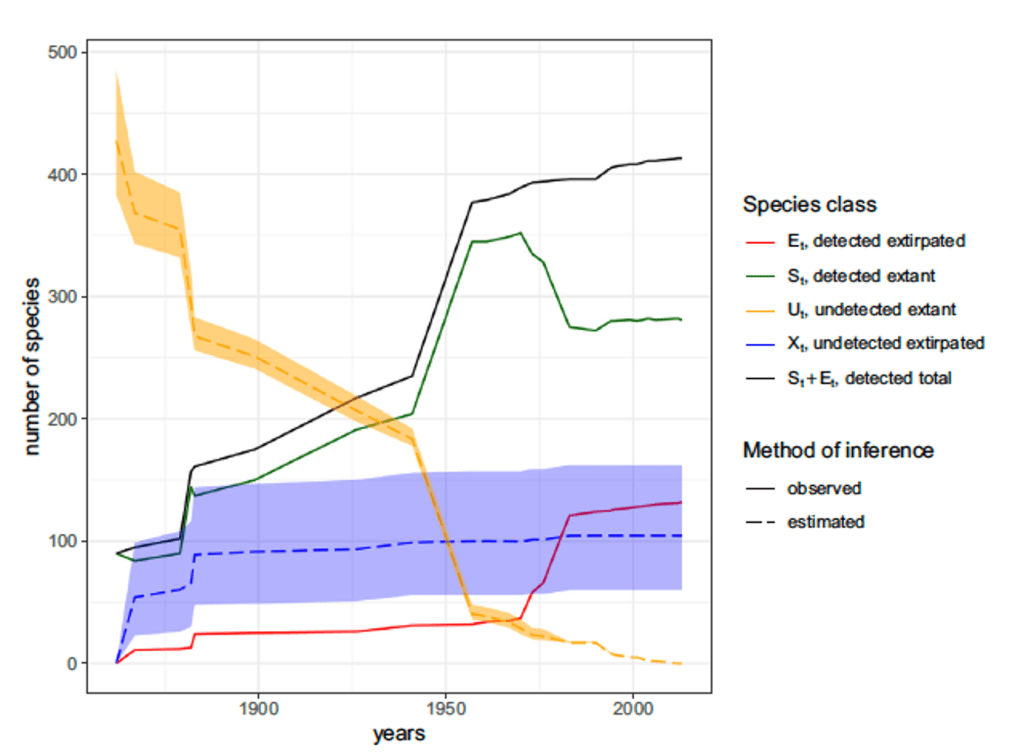
(shaded region). Theng et al 2020
Reference: Theng, Meryl, Wan FA Jusoh, Anuj Jain, Blanca Huertas, David JX Tan, Hui Zhen Tan, Nadiah P. Kristensen, Rudolf Meier, and Ryan A. Chisholm. “A comprehensive assessment of diversity loss in a well-documented tropical insect fauna: Almost half of Singapore’s butterfly species extirpated in 160 years.” Biological Conservation 242 (2020): 108401.
2016
Urban parks: refuges for tropical butterflies in Southeast Asia?
A study led by my Lepidopterist friends Dr Sing Kong Wah and Dr John James Wilson. We examined the species diversity of butterflies in urban parks in the Federal Territory of Kuala Lumpur and investigated the relationships between butterfly species richness and three park variables: i) park size, ii) distance from the central business district and iii) park age. Standardised butterfly sampling was conducted across different microhabitat types at each park: i) groves, ii) hedges, iii) flowerbeds and iv) unmanaged areas.
Featured article: Can butterflies cope with city life? Butterfly diversity in Kuala Lumpur parks
Read more: Sing et al. 2016
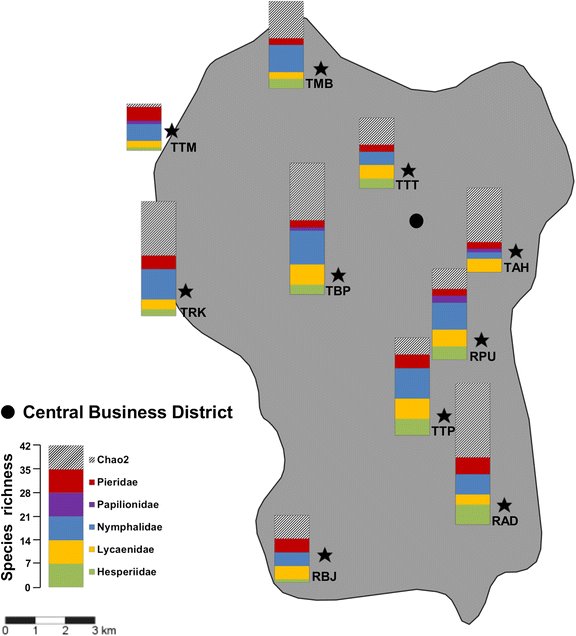
Reference: Sing, Kong-Wah, Wan FA Jusoh, Nor Rasidah Hashim, and John-James Wilson. “Urban parks: refuges for tropical butterflies in Southeast Asia?.” Urban Ecosystems 19, no. 3 (2016): 1131-1147.
2012
Habitat modifications on firefly populations
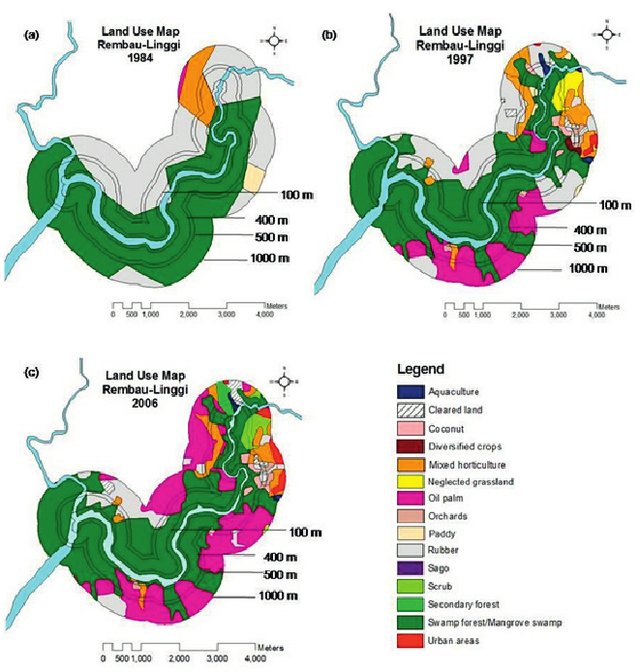
This study was conducted in Rembau-Linggi estuary in Peninsular Malaysia as part of MSc research with Dr Nor Rasidah Hashim. To investigate the changes taking place to the mangroves on which the fireflies depend, we conducted land-use spatial analysis of satellite images and ground surveys within specific distances from the river. Land use analysis showed that mangroves at the study site have been highly modified over two decades and underwent intensive conversion to other land uses (e.g. agriculture, aquaculture and urbanisation).
Read more: Jusoh & Hashim 2012
2010
Spatial distribution of fireflies in mangroves
My first research was conducted circa 2006–2007 for my undergraduate final year project where I observed and mapped the spatial distribution of fireflies in Kuala Sepetang, Perak for ecotourism potential. The results from my FYP were refined, polished and finally published as Short Communication in here: Jusoh, Hashim & Ibrahim (2010a)
In 2008 I explored other mangrove sites in Peninsular Malaysia as part of MSc thesis. The main site was located in the Rembau-Linggi estuary which consists of two main rivers i.e. Rembau and Linggi. Other tributaries are Ramuan China Besar, Ramuan China Kechil, Dua Ulu and Dua Ilir. Read here: Jusoh, Hashim & Ibrahim (2010b)
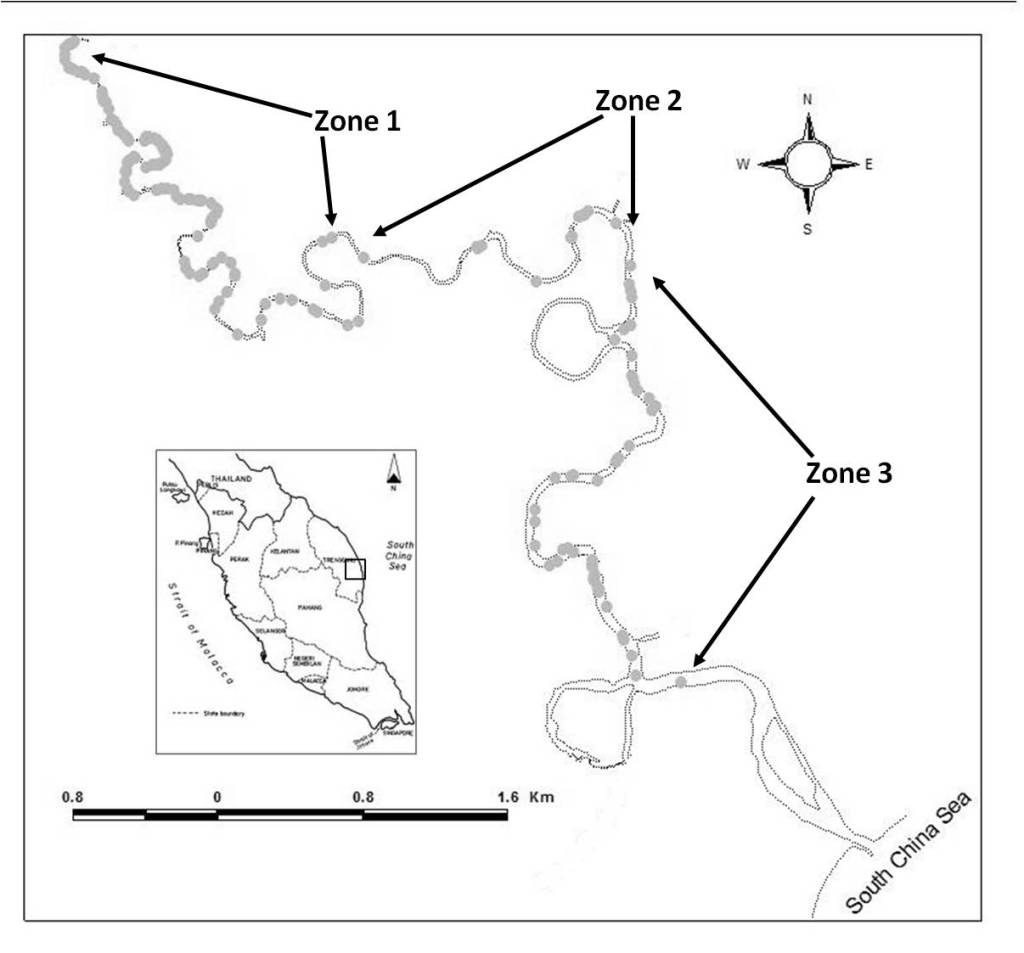
Map showing the geographic position of three firefly zones along Kerteh River, Terengganu. Grey dots represent the firefly display sections.
Other site is Kerteh River where my colleagues and I observed three zonations of firefly species which follow the zonation of mangrove assemblages. Read here: Jusoh, Wong & Hashim (2011)
 WAN JUSOH LAB