

New paper published by our lab, authored by Fathan, Jack and Wan!
We specifically asked – > How adult male and larval Lamprigera fireflies respond to varying intensities of artificial light at different wavelengths?
One overlooked consequence of urbanisation is artificial lights, which alter the night sky and cause light pollution. Fireflies, which have adapted bioluminescence as a unique form of reproductive communication and warning display are obvious victims of the effects of artificial light. In fact, the IUCN SSC Firefly Specialist Group has identified artificial light at night (ALAN) as a leading factor in the decline of firefly populations.
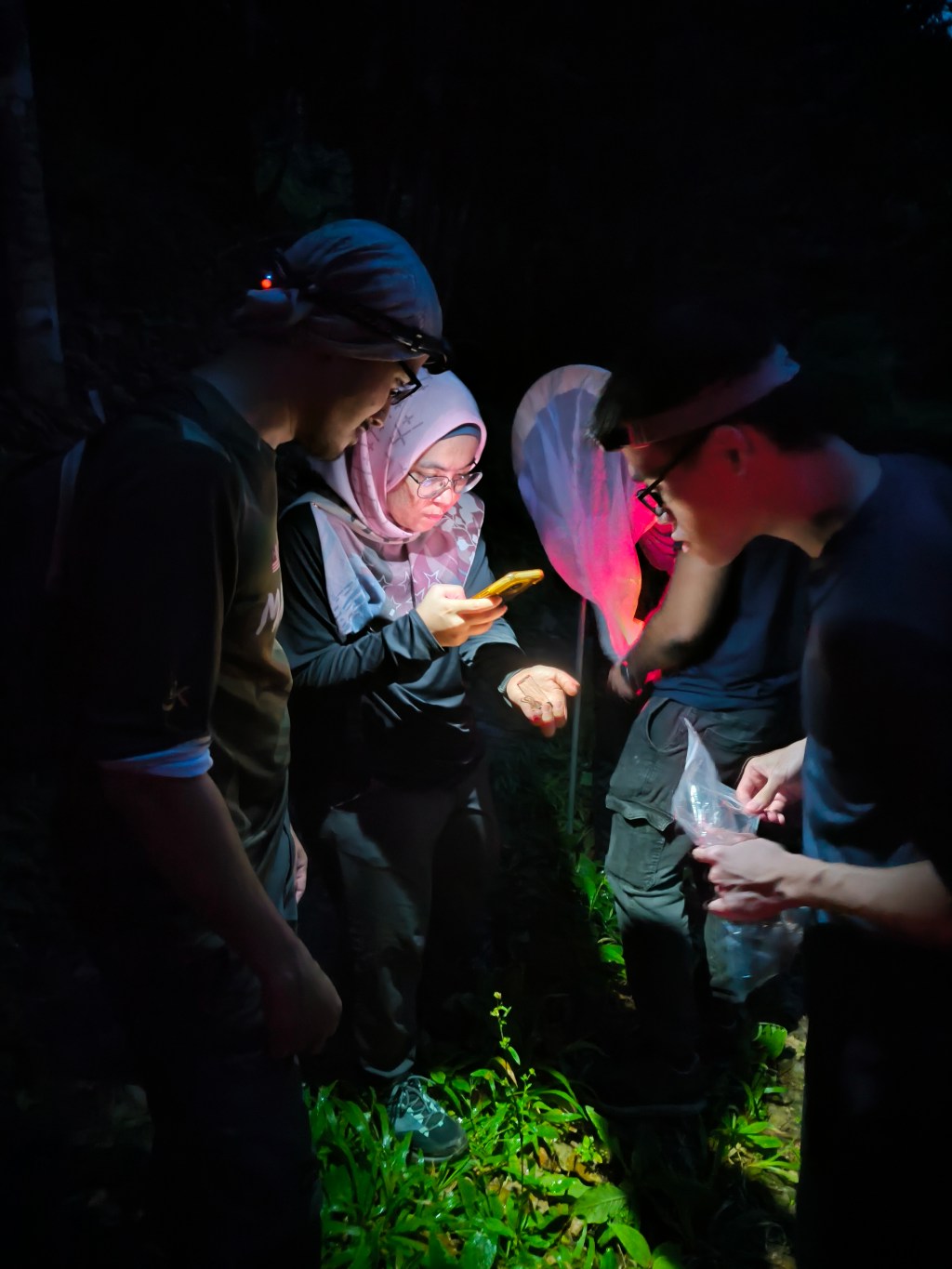
What we studied: How artificial light colour and brightness affect fireflies. In this case, we used 𝘓𝘢𝘮𝘱𝘳𝘪𝘨𝘦𝘳𝘢 sp. as the study organism at Bukit Kiara, Kuala Lumpur.
What we found: Adult fireflies were attracted to red and warm-white lights, while bright white lights reduced activity in larvae.
So what: Protecting fireflies means choosing both the right colour and the lowest effective brightness of light.
Why it matters: Selecting appropriate lighting options helps keep fireflies safe while still meeting our needs.
We thank the Friends of Bukit Kiara (FoBK) for their assistance in gaining access to the park and facilitating our early exploration of Bukit Kiara’s fireflies. We are grateful to Jabatan Landskap Negara for permitting us to survey the park at night. This project is part of MyABS permit no. 320809. We also thank Dr Sara Lewis for providing valuable feedback on this manuscript. This project was funded by the Fundamental Research Grant Scheme (FRGS), Ministry of Higher Education, Malaysia. Analysis of flash patterns was partially supported by the Nagao Natural Environmental Foundation.
To explore further, check out the full paper available through open access: https://lnkd.in/gMn4ACHP
Muharraran FA, Tan WJ, Jusoh WFA (2026) Behavioural responses of fireflies to artificial light: red lights attract adult Lamprigera (Coleoptera, Lampyridae). Nature Conservation 61: 95-111. https://doi.org/10.3897/natureconservation.61.146507

 WAN JUSOH LAB